
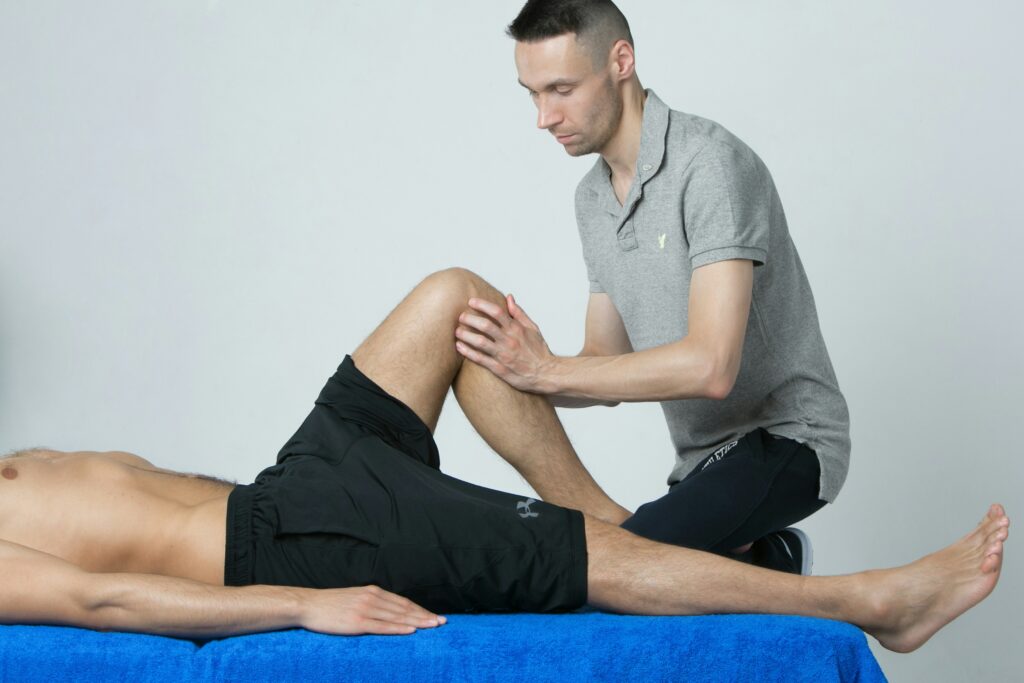
Sciatica can cause pain, tingling, numbness, or weakness that travels from the lower back into the hip, thigh, leg, or foot. Because symptoms can affect movement and make sitting or standing uncomfortable, finding the right sciatica treatment starts with understanding what is causing the irritation or compression of the sciatic nerve.
AICA Orthopedics provides access to multiple specialists and diagnostic services to help evaluate sciatica and determine an appropriate treatment approach based on the severity and underlying cause of the condition.
What Causes Sciatica?
Sciatica occurs when the sciatic nerve becomes irritated or compressed. A herniated disc is one possible cause, while bone spurs and other conditions affecting the spine can also put pressure on the nerve.
Certain factors may increase the likelihood of developing sciatica, including prolonged sitting, age, obesity, and diabetes. Maintaining regular physical activity, using proper body mechanics, and practicing good posture can help support spinal health.
What Does Sciatica Feel Like?
Sciatica symptoms can range from mild discomfort to severe pain. Symptoms commonly affect one side of the lower body and may begin in the lower back before traveling through the hip, thigh, and leg.
Common symptoms can include:
- Burning or tingling sensations that travel down the leg
- Numbness or weakness in the leg or foot
- Difficulty moving the leg or foot
- Pain in the lower back, hip, or buttocks
- Pain that becomes worse while sitting
- Difficulty standing because of pain
The specific symptoms can vary depending on where and how the sciatic nerve is being affected.
How Is Sciatica Diagnosed?
A proper diagnosis can help determine whether symptoms are actually caused by sciatica or another condition affecting the spine or nervous system. AICA Orthopedics uses diagnostic and imaging services to evaluate patients experiencing symptoms associated with sciatica.
Depending on the circumstances, diagnostic testing may include X-rays, CT scans, MRIs, or electromyography. X-rays and CT scans can help identify certain changes affecting the spine, while MRI can provide more detailed images of soft tissues such as herniated discs. EMG testing can help evaluate nerve and muscle function.
The appropriate testing depends on the patient’s symptoms and clinical evaluation.
What Are the Treatment Options for Sciatica?
There is no single treatment that is appropriate for every person with sciatica. The recommended approach depends on the severity of symptoms and the condition causing the nerve irritation or compression.
AICA Orthopedics states that treatment options may include physical therapy, chiropractic care, non-surgical injections, medication, or surgery when appropriate.
Physical Therapy
Physical therapy may be recommended to help improve movement, strength, and function. A personalized program can address limitations associated with the patient’s condition while supporting recovery.
Chiropractic Care
Chiropractic care may be considered for certain patients with sciatica. AICA Orthopedics describes chiropractic treatment as one option that may help address spinal issues associated with sciatic nerve compression.
Whether chiropractic care is appropriate depends on the underlying cause and the patient’s individual circumstances.
Interventional Spine Care
When symptoms are associated with conditions that may not respond adequately to conservative treatment, an interventional spine specialist may recommend procedures such as epidural or facet injections.
These treatments are not appropriate for everyone, so an evaluation is necessary to determine whether they may be beneficial.
Surgery
Surgery is generally reserved for certain cases where other approaches have not provided adequate relief or where the underlying condition requires surgical intervention. AICA Orthopedics notes that procedures such as discectomy or laminectomy may be considered in some cases involving herniated discs, bone spurs, or other sources of nerve compression.
When Should You Seek Medical Attention?
Some symptoms associated with sciatica require prompt medical attention. AICA Orthopedics advises patients to see a doctor immediately if they experience difficulty controlling their bladder or bowel movements, sudden severe numbness or muscle weakness, or sciatic pain following a major accident.
These symptoms can indicate a more serious condition and should not be ignored.
Can Sciatica Go Away on Its Own?
Some cases of sciatica may improve with time and appropriate self-care. However, persistent or severe symptoms should be evaluated by a healthcare professional to determine the underlying cause and appropriate treatment.
Seeking an evaluation can also help determine whether symptoms are actually related to sciatica or another condition affecting the spine, nerves, or surrounding tissues.
Finding the Right Treatment for Sciatica
The best approach to sciatica treatment depends on the cause, severity, and symptoms involved. Some patients may benefit from conservative care such as physical therapy or chiropractic treatment, while others may require injections or surgical treatment.
AICA Orthopedics brings multiple specialties together, including orthopedics, neurology, chiropractic care, physical therapy, and interventional spine care. This multidisciplinary approach allows patients to be evaluated and directed toward treatment options appropriate for their individual condition.
If you are experiencing persistent pain, numbness, tingling, or weakness associated with possible sciatica, a professional evaluation can help determine what is causing your symptoms and what treatment options may be appropriate.
 Nolissa Kryndalla has opinions about mental health resources. Informed ones, backed by real experience — but opinions nonetheless, and they doesn't try to disguise them as neutral observation. They thinks a lot of what gets written about Mental Health Resources, Fitness Tips and Routines, Workout Techniques and Guides is either too cautious to be useful or too confident to be credible, and they's work tends to sit deliberately in the space between those two failure modes.
Reading Nolissa's pieces, you get the sense of someone who has thought about this stuff seriously and arrived at actual conclusions — not just collected a range of perspectives and declined to pick one. That can be uncomfortable when they lands on something you disagree with. It's also why the writing is worth engaging with. Nolissa isn't interested in telling people what they want to hear. They is interested in telling them what they actually thinks, with enough reasoning behind it that you can push back if you want to. That kind of intellectual honesty is rarer than it should be.
What Nolissa is best at is the moment when a familiar topic reveals something unexpected — when the conventional wisdom turns out to be slightly off, or when a small shift in framing changes everything. They finds those moments consistently, which is why they's work tends to generate real discussion rather than just passive agreement.
Nolissa Kryndalla has opinions about mental health resources. Informed ones, backed by real experience — but opinions nonetheless, and they doesn't try to disguise them as neutral observation. They thinks a lot of what gets written about Mental Health Resources, Fitness Tips and Routines, Workout Techniques and Guides is either too cautious to be useful or too confident to be credible, and they's work tends to sit deliberately in the space between those two failure modes.
Reading Nolissa's pieces, you get the sense of someone who has thought about this stuff seriously and arrived at actual conclusions — not just collected a range of perspectives and declined to pick one. That can be uncomfortable when they lands on something you disagree with. It's also why the writing is worth engaging with. Nolissa isn't interested in telling people what they want to hear. They is interested in telling them what they actually thinks, with enough reasoning behind it that you can push back if you want to. That kind of intellectual honesty is rarer than it should be.
What Nolissa is best at is the moment when a familiar topic reveals something unexpected — when the conventional wisdom turns out to be slightly off, or when a small shift in framing changes everything. They finds those moments consistently, which is why they's work tends to generate real discussion rather than just passive agreement.