Start Where You Are
Bodyweight training starts with simplicity and scales with you. Whether it’s day one or year ten, it works because it grows as you do. For beginners, it’s a way in. No gym intimidation. No equipment chaos. Just your body and gravity, moving together. For intermediates and pros, it’s still a proving ground. Think tighter form, slower reps, harder holds, added tempo. You don’t outgrow this method you refine it.
Forget the pressure to buy gear or lock into another monthly gym membership. You don’t need it. You already have the most essential equipment: your body. No treadmill, no barbell, no mirror walls. Just space living room floor space, backyard grass space, maybe a park bench if you’re fancy.
Use bodyweight workouts to build strength without tanking your joints. Improve mobility while keeping your routines efficient. Push your endurance without overcomplicating your calendar. It’s all about getting strong on your own terms. No fluff. Just the basics done right, over and over it works.
Foundational Movements That Never Fail
Bodyweight training is built on a few key movements. These foundational exercises work multiple muscle groups, require no equipment, and can be scaled up or down for any fitness level.
Your Core Four
These four movements form the backbone of any effective bodyweight routine:
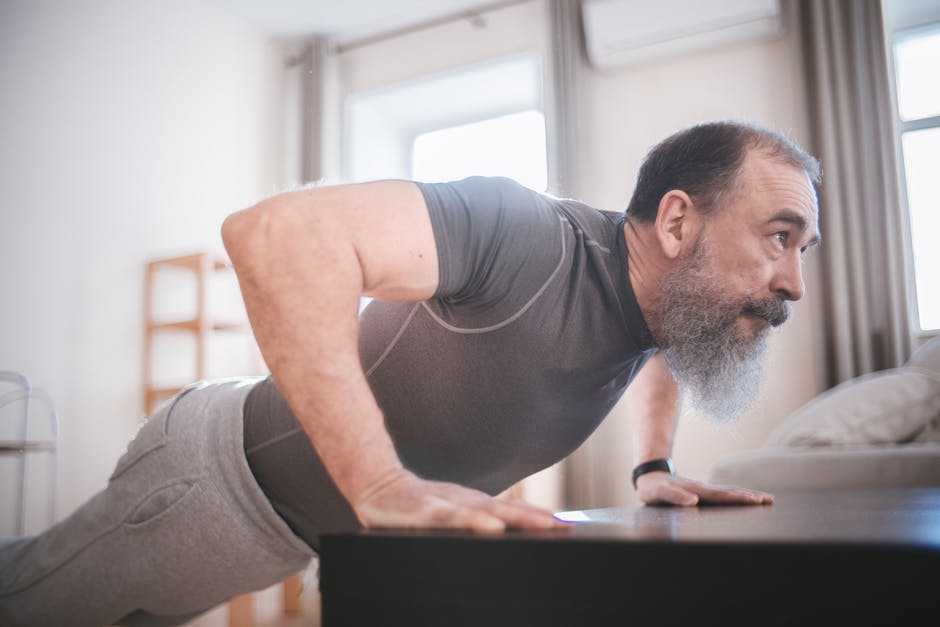
Push ups Target chest, shoulders, and triceps
Squats Engage quads, hamstrings, glutes, and core
Planks Strengthen the core while promoting posture and stability
Lunges Build unilateral leg strength and improve balance
How to Modify for Your Level
Each movement can be adjusted to match your current ability. Start simple, then level up over time.
Push ups
Beginner: Wall push ups or knee push ups
Intermediate: Traditional push ups
Advanced: Plyometric push ups or archer push ups
Squats
Beginner: Chair squats or shallow air squats
Intermediate: Standard bodyweight squats
Advanced: Jump squats or pistol squats
Planks
Beginner: Knee planks or inclined planks
Intermediate: Full forearm plank (30 60 seconds)
Advanced: Plank with shoulder taps or reaching planks
Lunges
Beginner: Stationary lunges with support
Intermediate: Walking lunges
Advanced: Jumping lunges or Bulgarian split squats
Consistency Over Intensity
While it’s tempting to push hard quickly, sustainable progress comes from showing up regularly not burning out.
Focus on form over speed
Train consistently, even if sessions are short
Let repetition turn into mastery, not injury
Keep these movements in steady rotation and don’t rush through progressions. Over time, they’ll build strength, improve mobility, and form a rock solid base for every other exercise you take on.
Beginner Routine (3x/week)
Start simple. Build discipline and get the form right that’s the whole point here. You train three times a week, giving your body time to recover and adjust. Don’t rush.
Each session focuses on control, balance, and learning how to move well. You’re not chasing sweat. You’re cementing foundations.
Incline Push Ups: Hands on a bench or wall, back straight, elbows in. Focus on clean reps.
Wall Sits: Slide down a wall until your thighs are parallel to the ground. Hold. Build up from 20 seconds.
Bird Dogs: On all fours. Extend one arm and the opposite leg. Stay steady. Feel your core do the work.
The goal here isn’t to break personal records. It’s to build a body that moves right. Nail the basics now, and everything else gets easier later.
(Not sure where to start? Follow a stepwise workout approach to match your level.)
Make It Progressive

Progressive overload isn’t just for lifting in gyms it’s just as critical in bodyweight workouts. To keep growing stronger, more mobile, and more capable, your body needs new challenges over time.
Simple Ways to Increase Difficulty
Instead of piling on weights, you’ll manipulate volume, time, and form. Here’s how:
Add Reps: Increase your reps slightly every 1 2 weeks. Even one or two more per set can lead to real gains over time.
Extend Time: Hold isometric exercises (like planks or wall sits) longer to build endurance and stability.
Increase Sets: Add an extra set to your routine after a couple of weeks to push your limits safely.
Use Tempo for Extra Intensity
Changing your tempo is a simple but effective way to level up. Try the following tweaks:
Slow it Down: Take 3 5 seconds to lower into a squat or push up to engage more muscle fibers.
Pause Mid Rep: Add a 1 2 second pause at the bottom of each movement to eliminate momentum and build control.
Controlled Exits: Focus on the eccentric phase (the lowering part) of movements to stimulate strength gains.
Prioritize Form Over Fatigue
Pushing through sloppy reps won’t help you risk injury and stall your progress. Instead:
Stop your set when your form starts to break down, even if you have energy left.
Focus on clean, consistent execution every rep.
Keep track of how movements feel week to week if they’re too easy with perfect form, it’s time to progress.
Progression is less about doing more, and more about doing it better over time.
Quick Recovery and Rest Tips
Don’t skip recovery it’s when the real progress happens. After pushing your body, it needs time to bounce back stronger. Aim for one full rest day every five to six days. No workouts, no guilt.
But rest doesn’t mean doing nothing. Active recovery matters. Go for a light walk. Do some mobility drills or easy stretching. Keep your body moving without taxing your system.
Also, don’t overlook the boring basics: sleep well, hydrate like you mean it, and eat actual food. These aren’t extras they’re the foundation. No supplement or routine covers for poor sleep and junk fuel. Keep it simple. Keep it steady.
Keep Showing Up
Momentum Over Perfection
Consistency is what transforms effort into results. You don’t need to be perfect you just have to keep showing up. Bodyweight training is one of the most accessible forms of fitness because it removes excuses. No commute. No equipment. No barriers.
Progress happens through repetition, not intensity alone
Skipping perfection builds better discipline over time
Short sessions, done often, beat long workouts done rarely
Your Environment Is Enough
You don’t need a gym or a fancy setup to start moving. Your environment no matter how small is your training ground.
A clear space on the floor is all you need to get started
Gravity provides enough resistance for real strength gains
Your body is already equipped with the tools to make progress
Leave Excuses Behind
There will always be reasons to skip a workout, but the best improvements come when you train despite the noise. Remind yourself:
You have everything you need, right now
Missing one session is human missing a week is habit forming
Each rep is a vote for the stronger version of you
(Looking for a more detailed plan? Check this stepwise workout approach to guide you forward.)
 Nolissa Kryndalla has opinions about mental health resources. Informed ones, backed by real experience — but opinions nonetheless, and they doesn't try to disguise them as neutral observation. They thinks a lot of what gets written about Mental Health Resources, Fitness Tips and Routines, Workout Techniques and Guides is either too cautious to be useful or too confident to be credible, and they's work tends to sit deliberately in the space between those two failure modes.
Reading Nolissa's pieces, you get the sense of someone who has thought about this stuff seriously and arrived at actual conclusions — not just collected a range of perspectives and declined to pick one. That can be uncomfortable when they lands on something you disagree with. It's also why the writing is worth engaging with. Nolissa isn't interested in telling people what they want to hear. They is interested in telling them what they actually thinks, with enough reasoning behind it that you can push back if you want to. That kind of intellectual honesty is rarer than it should be.
What Nolissa is best at is the moment when a familiar topic reveals something unexpected — when the conventional wisdom turns out to be slightly off, or when a small shift in framing changes everything. They finds those moments consistently, which is why they's work tends to generate real discussion rather than just passive agreement.
Nolissa Kryndalla has opinions about mental health resources. Informed ones, backed by real experience — but opinions nonetheless, and they doesn't try to disguise them as neutral observation. They thinks a lot of what gets written about Mental Health Resources, Fitness Tips and Routines, Workout Techniques and Guides is either too cautious to be useful or too confident to be credible, and they's work tends to sit deliberately in the space between those two failure modes.
Reading Nolissa's pieces, you get the sense of someone who has thought about this stuff seriously and arrived at actual conclusions — not just collected a range of perspectives and declined to pick one. That can be uncomfortable when they lands on something you disagree with. It's also why the writing is worth engaging with. Nolissa isn't interested in telling people what they want to hear. They is interested in telling them what they actually thinks, with enough reasoning behind it that you can push back if you want to. That kind of intellectual honesty is rarer than it should be.
What Nolissa is best at is the moment when a familiar topic reveals something unexpected — when the conventional wisdom turns out to be slightly off, or when a small shift in framing changes everything. They finds those moments consistently, which is why they's work tends to generate real discussion rather than just passive agreement.