
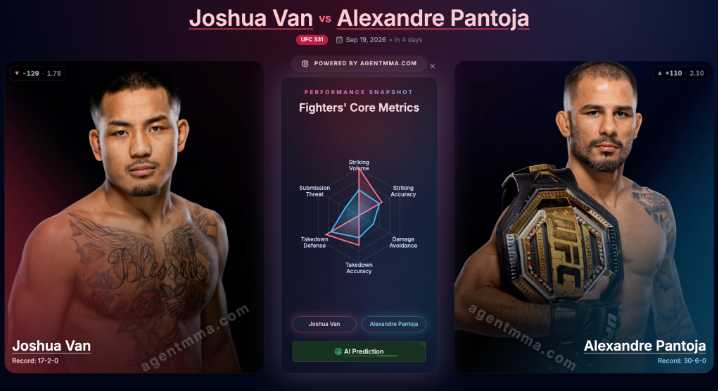
A fighter can look stronger, move faster in a training clip and still face the wrong opponent. That is why assessing MMA athleticism requires a different approach from comparing gym performances. The useful question is not simply who has the best physical attributes. It is who can apply those attributes in the situations this matchup is likely to produce.
For readers exploring MMA predictions, that distinction is a useful starting point. Strength, endurance, technique and decision-making are connected, but they are not interchangeable. A good analysis explains how they work together instead of awarding the fight to whoever appears most athletic.
Strength needs a route into the fight
Start by identifying the action a fighter is trying to impose. Is the plan to close distance, hold an opponent against the fence, finish a takedown or create space for clean punches? A general claim about strength becomes useful only when it connects to one of those tasks.
Consider a hypothetical powerful wrestler facing a mobile striker. The wrestler’s strength matters greatly after securing a body lock. It matters less while following the striker without controlling an exit. The first question is therefore about access: can the wrestler reach the position where the physical advantage becomes relevant?
Review complete sequences rather than isolated highlights. An impressive takedown means something different when it follows a clean setup than when it requires several failed attempts. The result deserves attention, but so does the work needed to achieve it.
Endurance is more than looking fresh
MMA does not ask athletes to repeat one identical movement. In a small study comparing official and simulated MMA bouts, Coswig and colleagues reported substantial high-intensity metabolic demands in both settings. That research supports taking conditioning seriously, but it does not provide a universal formula for predicting an individual fighter’s stamina.
For matchup analysis, examine what happens after demanding exchanges. Does the athlete still defend intelligently after wrestling? Can they resume their preferred offense after escaping a difficult position? Do they maintain useful movement, or merely continue throwing while losing accuracy and balance?
A quiet round also needs interpretation. It could reflect a deliberate change of pace rather than exhaustion. Before assigning a cardio weakness, look for repeated patterns across comparable contests and check whether the opponent forced the change.
Technique determines whether an advantage is usable
Technique gives physical tools a specific job. A long reach creates possibilities, but the analyst still needs to examine distance management. Quick hands create opportunities, but they do not explain whether a fighter recognizes counters or protects the exit after an attack.
A practical viewing exercise is to pause before an exchange and identify the available choices. Then watch which choice the fighter makes. This shifts attention from the most dramatic moment to the setup, execution and consequences.
The glossary on UFCStats fighter profiles distinguishes significant strikes landed per minute from striking accuracy. Those are different questions: how much a fighter lands and what proportion of attempts succeeds. Neither number alone establishes superior technique. Use the figures to decide which exchanges deserve a closer look.
Fight IQ should describe decisions, not personality
Calling someone intelligent, fearless or mentally weak can hide more than it explains. Keep the discussion tied to observable decisions. Did the fighter repeat an attack that had stopped working? Did they recognize a safer route to an advantageous position? Did a tactical adjustment improve the next exchange?
A sound choice can still fail, and a poor choice can occasionally succeed. For example, a desperate strike might produce a knockout without making the preceding defensive mistake a good habit. Separate the outcome from the quality of the decision that produced it.
Scoring creates another boundary. The Association of Boxing Commissions’ scoring clarification emphasizes the effects of effective fighting rather than simply counting actions. Looking busy, attempting many takedowns or holding a position is not an automatic substitute for meaningful offense.
Build a comparison around competing routes to success
Before selecting a winner, write one credible route to victory for each athlete. A striker might need open space, disciplined exits and time to establish rhythm. A grappler might need repeated entries, effective positional advances and a way to prevent clean separations. These are hypotheses to investigate, not conclusions about any named fighter.
Use AgentMMA’s fighter comparison tool to select the two athletes you are studying, then test your initial view against their actual performances. The tool provides a starting point for a matchup; your task is to ask whether the proposed advantages can meet inside the same fight.
Also write down the weakest assumption in your preferred argument. Perhaps the wrestler has rarely faced a comparable mover. Perhaps the striker’s best performances came against opponents who did not threaten takedowns. Missing evidence should reduce confidence rather than disappear from the preview.
Turn an impression into a useful prediction
A useful conclusion explains both the likely pattern and the conditions that could change it. Instead of saying the stronger athlete should win, describe the position they need to reach and the resistance they are likely to encounter. Instead of saying the fitter athlete takes over late, explain what evidence suggests their opponent will struggle to maintain the relevant work.
This approach also improves the viewing experience. You arrive with specific questions, not just allegiance to a name. Whether the prediction proves right or wrong, the fight can teach you which physical advantages translated into skill, which were neutralized and which assumptions need revisiting.
 Dannylo Rogerstone is the kind of writer who genuinely cannot publish something without checking it twice. Maybe three times. They came to wellness strategies through years of hands-on work rather than theory, which means the things they writes about — Wellness Strategies, Workout Techniques and Guides, Fitness Tips and Routines, among other areas — are things they has actually tested, questioned, and revised opinions on more than once.
That shows in the work. Dannylo's pieces tend to go a level deeper than most. Not in a way that becomes unreadable, but in a way that makes you realize you'd been missing something important. They has a habit of finding the detail that everybody else glosses over and making it the center of the story — which sounds simple, but takes a rare combination of curiosity and patience to pull off consistently. The writing never feels rushed. It feels like someone who sat with the subject long enough to actually understand it.
Outside of specific topics, what Dannylo cares about most is whether the reader walks away with something useful. Not impressed. Not entertained. Useful. That's a harder bar to clear than it sounds, and they clears it more often than not — which is why readers tend to remember Dannylo's articles long after they've forgotten the headline.
Dannylo Rogerstone is the kind of writer who genuinely cannot publish something without checking it twice. Maybe three times. They came to wellness strategies through years of hands-on work rather than theory, which means the things they writes about — Wellness Strategies, Workout Techniques and Guides, Fitness Tips and Routines, among other areas — are things they has actually tested, questioned, and revised opinions on more than once.
That shows in the work. Dannylo's pieces tend to go a level deeper than most. Not in a way that becomes unreadable, but in a way that makes you realize you'd been missing something important. They has a habit of finding the detail that everybody else glosses over and making it the center of the story — which sounds simple, but takes a rare combination of curiosity and patience to pull off consistently. The writing never feels rushed. It feels like someone who sat with the subject long enough to actually understand it.
Outside of specific topics, what Dannylo cares about most is whether the reader walks away with something useful. Not impressed. Not entertained. Useful. That's a harder bar to clear than it sounds, and they clears it more often than not — which is why readers tend to remember Dannylo's articles long after they've forgotten the headline.